Diab’hitude
- HEds students: Joana Jordao Marques, Leona Zenunaj, Claire Gapany
- HEIA students: Lionel Ding, Elwan Mayencourt, Ermal Fejzaj
To help young adults with type 1 diabetes better estimate the carbohydrate content of their regular meals
Type 1 diabetes (T1D) is a chronic condition in which the body no longer produces (or produces very little) insulin, often due to an autoimmune disorder. As a result, people with T1D must take insulin injections for the rest of their lives and monitor their blood sugar levels. On a day-to-day basis, this means monitoring blood sugar levels, counting carbohydrates in meals, adjusting insulin doses based on diet, exercise, stress, illness, etc., and managing the risks of hypoglycemia (low blood sugar) and hyperglycemia (high blood sugar).
The target audience for this project consists of young adults aged 18 to 25 with type 1 diabetes, who are often transitioning to independence (pursuing their studies, gaining their first work experience, and leading a more active social life). This period can make managing diabetes more challenging, as schedules, meals, and physical activity are often irregular.
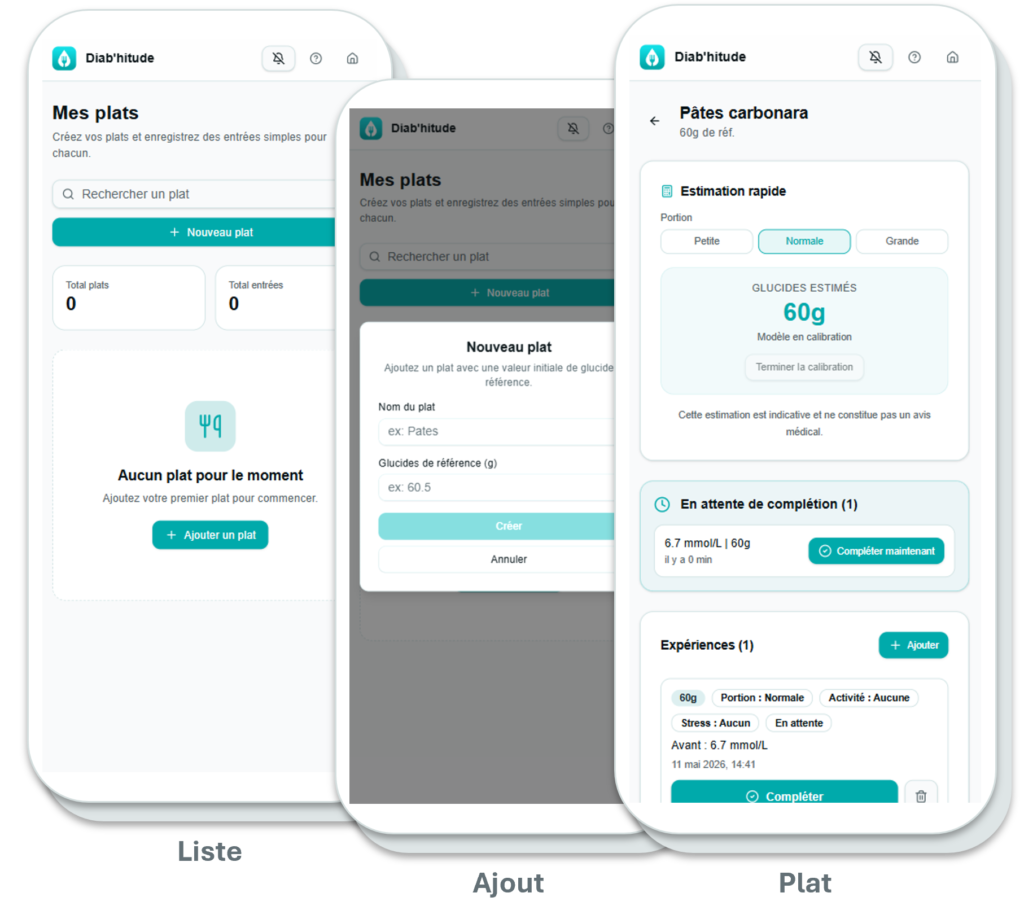
The proposed solution is a mobile app designed to help users estimate carbohydrate content. The app does not aim to estimate the carbohydrate content of every possible meal, but instead deliberately focuses on the dishes the user eats on a regular basis.
For each experiment, the user enters:
- the pre-meal blood glucose level,
- the estimated carbohydrate intake entered into the pump,
- the blood glucose level measured approximately two hours after the meal (a notification is sent at that time to remind the user to complete the experiment)
Based on the difference observed between blood glucose levels before and after a meal, the app gradually adjusts the estimated carbohydrate content of the dish, taking into account the context provided by the user (e.g., stress, physical activity, fatigue, illness, etc.). After several consistent results, the dish is considered calibrated.
The app then saves this information in a personal food log, which can be viewed during subsequent meals. This allows users to quickly retrieve a reliable estimate without having to make a rough guess each time. A graph for each dish also lets users visualize how their experiences have changed over time and track their progress in calibrating the app.